

Table of Contents
- What Defines the Best Everyday Carry Work Gear in 2026
- Quick Comparison: Hide & Hem Leather Work Essentials
- The Foundation of Your Loadout: Durable Work Apparel for Men
- 1. Embossed Leather Belt 1 1/2" Iron Worker: Daily Driver for Hard Labor
- 2. Leather Vests with Trade Emblems: Utility and Concealed Carry Pockets
- How to Organize Your Everyday Carry Bag Around Core Tools
- Maintaining Leather Work Accessories for Years of Service
- Conclusion: Build Your 2026 Everyday Carry Work Gear System
- Frequently Asked Questions
Last Updated: September 8, 2026
Everyday carry work gear is the equipment you rely on from the moment you leave the truck until the job is done. The best everyday carry work gear 2026 prioritizes durability that survives a full work week without replacement. This guide from Hide & Hem, LLC focuses on leather goods built for tradespeople tired of gear that cracks, peels, or falls apart after a few months of honest labor.
Most guides treat everyday carry as a collection of gadgets. We treat it as a system where your belt, vest, and wallet work together to distribute weight and keep tools within reach. Below, we'll show you how to build that system, what materials hold up on a job site, and how to maintain your investment.
What Defines the Best Everyday Carry Work Gear in 2026
Everyday carry work gear in 2026 is defined by material weight, hardware quality, and load management during a full shift. A thin belt that looks fine in a store photo will fold under the weight of tool pouches. A vest with weak seams will fail at the pocket where you need it most.
The core criteria for selecting EDC gear remain consistent: abrasion resistance, zipper quality, and strap comfort. For leather specifically, the weight of the hide matters more than the brand name stitched inside. Heavy 8/9 oz. bull hide leather resists splitting and cracking far better than the lighter 3-4 oz. leathers used in fashion belts (peer-reviewed research).
Material Quality |
What It Means |
Best Use Case |
|---|---|---|
8/9 oz. bull hide |
Thick, dense, resists splitting |
Heavy daily labor, tool belts |
1.1-1.2mm cowhide |
Balanced durability and flexibility |
Vests, outer layers |
Bonded leather |
Shredded fibers glued together |
Avoid for any real work |
Quick Comparison: Hide & Hem Leather Work Essentials
Hide & Hem, LLC builds its everyday carry work gear around two anchors: a heavy-duty belt and a utility vest. The Embossed Leather Belt 1 1/2" Iron Worker is handmade in New Jersey from 100% bull hide, and the vests use 1.1-1.2mm premium cowhide with reinforced stitching.
Item |
Price |
Core Feature |
Best For |
|---|---|---|---|
Embossed Leather Belt 1 1/2" Iron Worker |
$57.99 |
8/9 oz. bull hide, nickel roller buckle |
Daily driver for hard labor |
Leather Vest with Trade Emblem |
$129.00 |
Two concealed carry pockets, snap front |
Utility and secure storage |
The belt uses a heavy nickel plate roller buckle with snaps, so you can swap buckles without replacing the whole belt. Vests come in trade-specific emblems for construction, electrical, welding, and heavy equipment operation, with sizes from S to 7XL.
The Foundation of Your Loadout: Durable Work Apparel for Men
Durable work apparel for men starts with the belt because it carries the load. Your pants hold your phone and wallet, but the belt distributes the weight of tool pouches, holsters, and clips across your hips. A belt that sags or twists forces constant adjustment, wasting time and throwing off your posture.
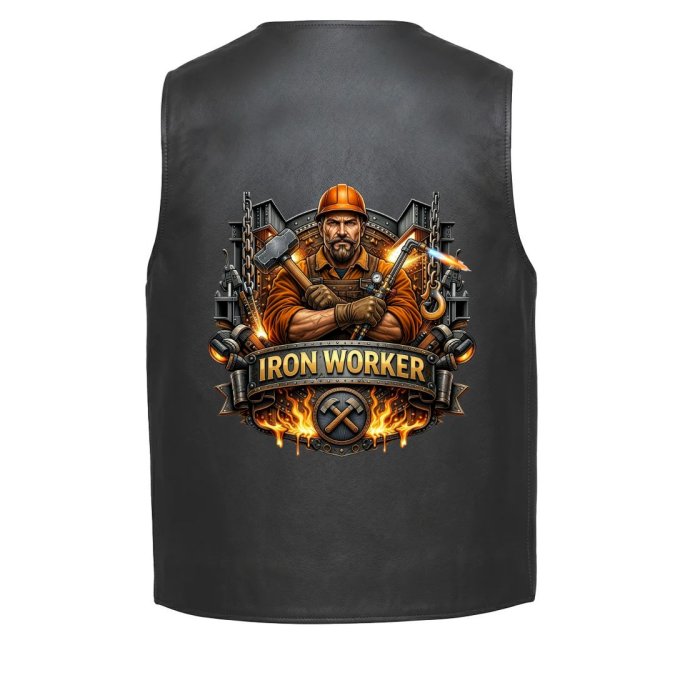
Men's Welder Emblem Leather Biker Vest
A common mistake is choosing a belt based on waist size alone. For a leather belt, order one size larger than your waist measurement. A 34-inch waist needs a 36-inch belt, leaving a proper tail length of 6 to 10 inches for tucking, tool clips, and comfort (the CDC).
1. Embossed Leather Belt 1 1/2" Iron Worker: Daily Driver for Hard Labor
The Embossed Leather Belt 1 1/2" Iron Worker is the backbone of a reliable everyday carry work gear setup. At $57.99, it uses 8/9 oz. bull hide that resists the splitting and cracking that ruins thinner belts within a year. The leather is custom cut when you order, so the sizing matches your actual measurements.
What most reviews miss is the buckle system. The heavy nickel plate roller buckle is attached with snaps, so you can swap it out if it gets damaged or you want a different look. This extends the belt's life since the buckle is often the first point of failure on cheaper alternatives. Customers like Anthony Reed note it is "a solid belt that works and comfortable to wear all day."
2. Leather Vests with Trade Emblems: Utility and Concealed Carry Pockets
A leather vest adds a second layer of everyday carry work gear without the bulk of a jacket. The Hide & Hem vests, priced at $129.00, include two outside pockets for quick access to tools or a phone and two inside concealed carry pockets for secure storage. The snap front closure and V-neck collar keep the profile simplified under a hi-vis jacket or worn alone.
The vests are available with emblems for specific trades, including construction worker, lineman, plumber, mason, carpenter, welder, heavy equipment operator, and electrician. The designs are heat pressed, which holds up better than screen printing that cracks and peels.
How to Organize Your Everyday Carry Bag Around Core Tools
Organizing an everyday carry bag for work is less about buying the biggest pack and more about engineering a load system that keeps weight balanced, access instant, and gear protected. The top-performing bags on the market in 2026 succeed because their internal layouts mirror how tradespeople and commuters actually move through a day.
The Load-Order Principle
Weight distribution starts with a simple rule: the heaviest items sit closest to your spine and hip line, not against the back panel where they create a hot spot. A 5-pound tool pouch swinging at the bottom of a bag pulls the whole load backward, forcing your shoulders and lower back to compensate. Position heavy tools in a dedicated middle compartment, vertically oriented, so the mass rides at your center of gravity.
Compartmentalization That Works
A bag with too many tiny pockets is as frustrating as one with none. The most effective layout for work EDC follows a three-zone system:
- Zone 1, Quick Draw (top or front flap): Phone, notepad, pens, flashlight, and a pocket knife. These items are accessed 10-15 times per shift and need to be reachable without unbuckling the main compartment.
- Zone 2, Core Load (middle, closest to spine): Multi-tool, hammer, tape measure, or any tool weighing over 1 pound. This zone uses a padded divider or a dedicated tool roll to prevent metal edges from digging into your back.
- Zone 3, Support Items (bottom or outer pockets): Charging cables, first-aid kit, documents, and rain cover. These are rarely needed mid-task and can sit lower without affecting balance.
Modular Pouches Beat Fixed Layouts
Fixed sewn-in pockets lock you into one configuration. Modular pouches, like the Maxpedition Fatty or the Vanquest EDCM, let you reconfigure your carry system when your job changes. A welder moving from a shop floor to a site inspection can swap out a heavy tool roll for a slim document organizer in under a minute. This modularity also extends bag life: when a pouch wears out, you replace the pouch, not the entire bag.
Laptop and Tablet Protection
For commuters and remote workers, the laptop compartment is the most critical element. A dedicated suspended sleeve, where the laptop floats above the bottom of the bag, absorbs shock when you set the bag down hard. Look for a compartment that fits your device snugly with at least 0.5 inches of foam padding on all sides.
The 24-Hour Test
Before committing to any organization system, load the bag completely and wear it for a full workday. If you find yourself digging for the same item more than twice, that item needs a new home. If a strap digs into your shoulder by 2 PM, the load distribution is off. A well-organized bag requires an adjustment period before the layout feels natural.
Maintaining Leather Work Accessories for Years of Service
Most buying guides end at the point of purchase. They tell you what to buy, not how to keep it alive. That is a missed opportunity because the real cost of everyday carry work gear is not the upfront price, it is the replacement cycle. A $60 belt that dies in 18 months costs more than a $120 belt that survives a decade. Here is how to extend the service life of every material in your loadout.
Leather: The Moisture Balance Problem
Leather is hide, and hide fails when it loses moisture faster than it can absorb it from the environment. The two killers are dry air and salt. In winter, road salt and de-icing chemicals leach the natural oils out of leather, leaving it stiff and prone to cracking (the NIH). In summer, UV exposure breaks down the collagen fibers that give the hide its tensile strength.
The maintenance routine that works for tradespeople who wear leather daily is simple but non-negotiable:
- Wipe down after every shift: a damp microfiber cloth removes abrasive dust, salt residue, and sweat before they penetrate the surface.
- Condition every 6-8 weeks: use a conditioner with beeswax or lanolin as the first ingredient. These compounds replace the oils lost through wear. Avoid silicone-based products, which create a surface seal that traps moisture and accelerates rot.
- Dry naturally, never fast: wet leather left near a heater or in direct sun loses moisture unevenly, causing the fibers to separate and crack. Air-dry at room temperature, then condition before the next use.
- Store with structure: hang vests on wide padded hangers to prevent shoulder stretching. Roll belts in a loose coil rather than folding them sharply, a crease becomes a stress point that splits under load.
Nylon and Cordura: The Hidden Enemy Is Abrasion
Ballistic nylon and 1000D Cordura are tough, but they are not immortal. The most common failure point is not the fabric itself, it is the stitching and the coating. When a nylon bag starts to show fraying at the corners or along the zipper track, that is the fabric's water-resistant coating wearing away, not the weave failing. Reapply a DWR (durable water repellent) spray every 3-4 months for bags that see regular outdoor use. For stitching, a dab of clear nail polish or a seam sealer on loose threads prevents them from unraveling further.
Zippers and Hardware: The First Points of Failure
Zippers fail because dirt and grit grind into the teeth, wearing down the slider mechanism. A monthly flush with compressed air or a soft brush removes debris before it becomes abrasive. Apply a dry lubricant, never oil, which attracts dust, to the zipper teeth every 6-8 weeks. For buckles and snaps, check for corrosion or bending. A bent roller buckle on a work belt will wear the leather unevenly and eventually cut into the hide.
The Annual Audit
Once a year, empty your entire carry system and inspect every item under bright light. Look for:
- Cracks or dry spots on leather (condition immediately)
- Frayed stitching on bags or vests (repair with a needle and waxed thread before the seam fails)
- Zipper teeth that skip or catch (replace the slider before it damages the track)
- Corrosion on metal hardware (clean with a brass brush and apply a thin coat of protectant)
The Cost Math
A quality leather belt at $57.99 with a long service life offers better value over time than cheaper alternatives that fail quickly. Maintenance is the difference between paying once and paying repeatedly.
Conclusion: Build Your 2026 Everyday Carry Work Gear System
Building your 2026 everyday carry work gear system comes down to buying fewer, better items and maintaining them properly. A heavy bull hide belt and a cowhide vest with reinforced pockets will outlast three rounds of cheap replacements, and they will stay comfortable because the leather molds to your body over time.
At Hide & Hem, LLC, we build belts by hand in New Jersey using 8/9 oz. bull hide, and our vests use 1.1-1.2mm cowhide with concealed carry pockets and snap closures. The trade emblems let you carry your profession on your sleeve, and the construction is designed to survive the demands of your routine. Get started with Hide & Hem, LLC and build a carry system that lasts through every shift in 2026.
Frequently Asked Questions
What are the best brands for everyday carry gear?
The best everyday carry work gear brands focus on materials and construction rather than flashy features. For leather goods, look for full-grain or bull hide leather, heavy stitching, and solid hardware like nickel-plated buckles. Hide & Hem uses 8/9 oz. bull hide for belts and 1.1-1.2mm cowhide for vests, which is why they hold up on job sites. Avoid brands that use bonded leather or thin materials, as they crack and fail within a year.
How do I choose durable gear for daily work use?
Match the material to the abuse it will take. For belts, choose heavy bull hide leather (8/9 oz.) with a roller buckle that won't dig into your waist. For vests, look for cowhide construction with reinforced seams and snap closures that resist snagging. Check the hardware: black or nickel plate lasts longer than painted finishes. Think about pockets too. Two outside and two inside concealed carry pockets give you quick access without adding bulk to your loadout.
How should I care for my leather work belt and vest?
Wipe off dirt with a dry cloth at the end of each week. Apply a thin layer of leather conditioner every 2-3 months, especially if the leather feels dry or stiff. Let wet leather air dry away from direct heat; never force-dry it with a hair dryer or heater. For the belt, condition both sides to prevent cracking. Store the vest on a wide hanger to keep its shape. This routine keeps the leather supple without making it greasy.
What is the best way to organize a work bag for daily carry?
Group items by frequency of use. Keep your phone, wallet, and keys in quick-access pockets. Use a dedicated tech pouch for chargers and cables so they don't tangle with tools. Reserve the main compartment for items you need less often, like a change of clothes or a tablet. If you carry a multi-tool, clip it to the inside of the bag rather than letting it sink to the bottom. This setup keeps your load manageable and your gear reachable.

